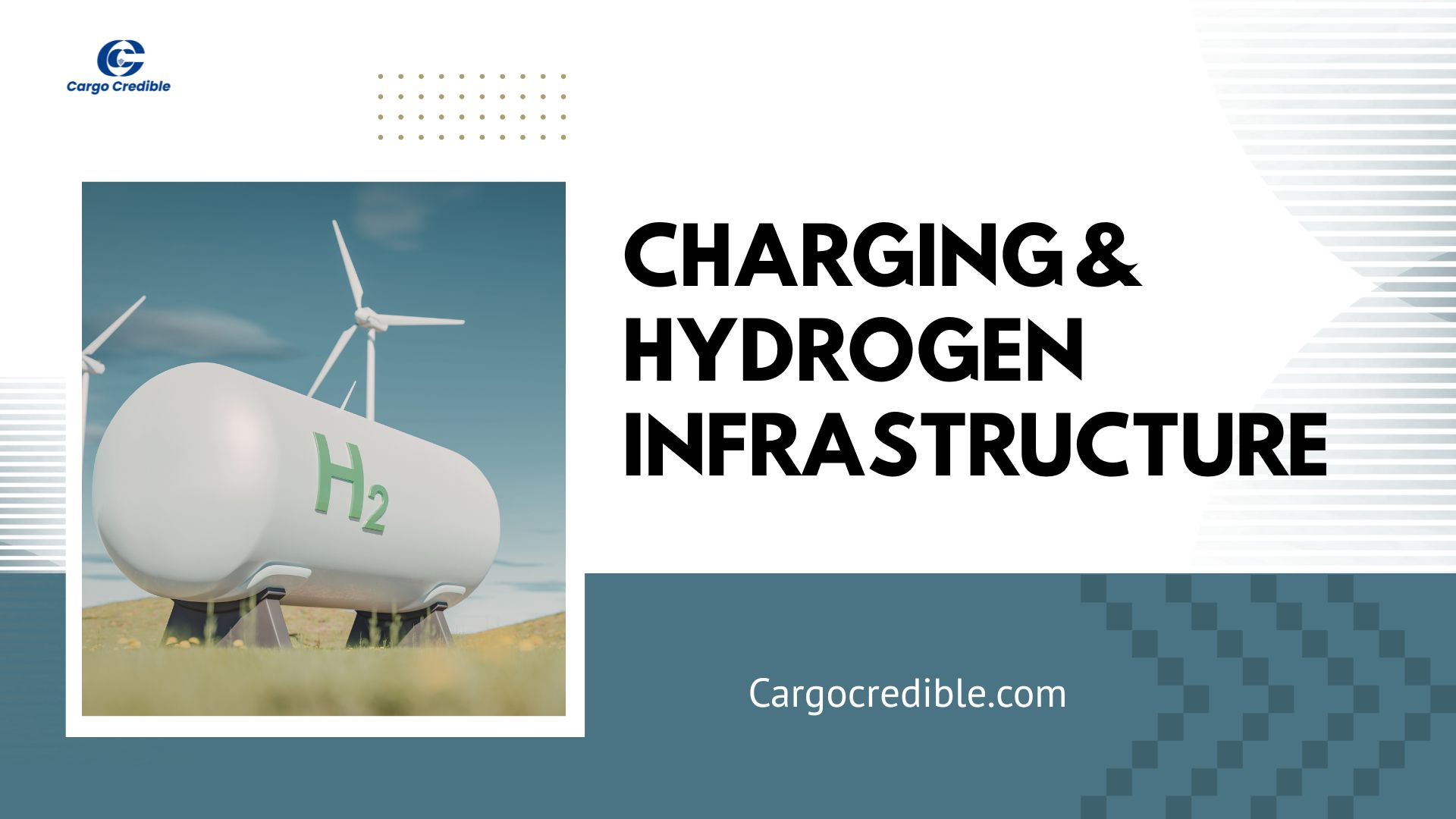
Charging and hydrogen infrastructure refers to the network of facilities, equipment, power systems, fueling stations, and support services that enable electric and hydrogen-powered trucks to operate efficiently. Just as diesel trucks rely on fuel stations, zero-emission trucks require specialized infrastructure to recharge batteries or refuel with hydrogen. Without adequate infrastructure, electric and hydrogen trucks cannot operate at scale, making infrastructure one of the most important factors in the future of freight transportation.
Types of Charging Infrastructure for Trucking
1. Depot Charging Stations
Depot charging allows trucks to recharge at fleet terminals, distribution centers, and company yards, usually overnight.
Contribution to Trucking
- Enables fleets to start each day with fully charged vehicles.
- Reduces dependence on public charging networks.
- Supports predictable local and regional freight operations.
- Helps carriers manage energy costs through scheduled charging.
Impact on Industry
- Carriers gain more control over fleet operations.
- Drivers spend less time searching for charging locations.
- Shippers benefit from more reliable delivery schedules.
- Freight companies can lower fuel expenses over time.
2. Public Truck Charging Stations
These are commercial charging facilities located along highways, logistics hubs, truck stops, and freight corridors.
Contribution to Trucking
- Supports long-haul and regional trucking routes.
- Expands the operational range of electric trucks.
- Creates a charging ecosystem similar to traditional fueling stations.
Impact on Industry
- Drivers can recharge while taking mandatory rest breaks.
- Carriers can operate electric trucks across wider geographic areas.
- Freight movement becomes less dependent on diesel fuel.
3. Megawatt Charging Systems (MCS)
Megawatt Charging Systems are ultra-fast chargers designed specifically for heavy-duty trucks. They can deliver significantly more power than passenger vehicle chargers, allowing large truck batteries to recharge during a driver's required rest period.
Contribution to Trucking
- Reduces charging times dramatically.
- Makes long-haul electric trucking commercially viable.
- Improves truck utilization and productivity.
Impact on Industry
- Drivers spend less downtime waiting for a charge.
- Fleets can complete more loads per truck.
- Freight schedules become more competitive with diesel operations.
- Brokers gain access to more zero-emission carrier capacity.
4. Corridor Charging Networks
These are strategically placed charging stations along major freight routes and interstate highways.
Contribution to Trucking
- Supports continuous movement of freight over long distances.
- Connects major logistics hubs and distribution centers.
- Enables nationwide electric truck operations.
Impact on Industry
- Reduces range anxiety for carriers and drivers.
- Increases confidence in electric freight transportation.
- Encourages fleet electrification across regions.
5. Battery Storage and Energy Management Systems
Many truck charging sites include battery storage systems that store electricity and release it during peak demand periods.
Contribution to Trucking
- Prevents grid overload.
- Supports multiple trucks charging simultaneously.
- Lowers electricity costs during peak periods.
Impact on Industry
- Improves charging reliability.
- Helps fleets avoid expensive utility charges.
- Supports large-scale freight electrification projects.
Types of Hydrogen Infrastructure for Trucking
1. Hydrogen Refueling Stations
Hydrogen refueling stations dispense compressed hydrogen fuel into fuel-cell trucks.
Contribution to Trucking
- Provides fast refueling comparable to diesel.
- Supports long-distance freight routes.
- Enables continuous truck operation with minimal downtime.
Impact on Industry
- Drivers spend less time refueling.
- Carriers maintain high asset utilization.
- Freight operations remain efficient on long-haul routes.
2. Hydrogen Freight Corridors
These are transportation routes equipped with strategically located hydrogen fueling stations.
Contribution to Trucking
- Allows fuel-cell trucks to travel long distances.
- Connects ports, warehouses, manufacturing centers, and logistics hubs.
Impact on Industry
- Expands adoption of hydrogen-powered freight.
- Supports cross-country freight movement.
- Increases confidence among carriers considering hydrogen fleets.
3. Hydrogen Production Facilities
These facilities generate hydrogen through electrolysis or other production methods.
Contribution to Trucking
- Creates a local fuel supply.
- Reduces dependence on imported fuels.
- Strengthens energy security for transportation networks.
Impact on Industry
- Improves fuel availability.
- Stabilizes long-term fuel supply.
- Encourages investment in hydrogen trucking.
4. Hydrogen Storage and Distribution Systems
Hydrogen must be stored and transported safely before reaching fueling stations.
Contribution to Trucking
- Ensures a continuous fuel supply.
- Supports station operations across freight corridors.
Impact on Industry
- Reduces fuel shortages.
- Improves operational reliability.
- Supports large-scale deployment of hydrogen trucks.
How Charging & Hydrogen Infrastructure Affect Freight Transportation
Faster Freight Movement: As charging and fueling networks expand, carriers can move freight more efficiently without worrying about limited refueling options. Infrastructure development directly improves route planning and delivery reliability.
Reduced Operating Costs: Electricity and hydrogen have the potential to reduce long-term fuel expenses, especially as infrastructure becomes more widespread and technology improves.
Benefits
- Lower fuel costs.
- Reduced maintenance expenses.
- Improved fleet efficiency.
Increased Equipment Utilization: The faster trucks can recharge or refuel, the more time they spend moving freight instead of sitting idle.
Benefits
- More revenue-generating miles.
- Higher productivity per truck.
- Better return on fleet investments.
Improved Sustainability: Charging and hydrogen infrastructure support zero-emission transportation initiatives and help carriers meet environmental goals.
Benefits
- Reduced greenhouse gas emissions.
- Lower carbon footprints.
- Greater compliance with emissions regulations.
How It Affects Truck Drivers
Reduced Fueling Stress: Drivers gain access to dedicated charging and fueling locations designed for commercial vehicles.
Better Route Planning: More infrastructure means fewer concerns about where to recharge or refuel.
Potentially Quieter Operations: Electric and hydrogen trucks produce less noise than diesel trucks, creating a more comfortable driving experience.
Alignment With Rest Breaks: Megawatt charging is being designed so trucks can recharge during mandatory driver breaks, minimizing operational disruption.
How It Affects Carriers
Competitive Advantage: Carriers that adopt charging and hydrogen infrastructure early may attract shippers seeking sustainable transportation solutions.
Lower Long-Term Costs: As infrastructure expands and technology matures, carriers may reduce fuel and maintenance expenses.
Expanded Business Opportunities: Many large shippers are increasingly prioritizing carriers that can help meet sustainability targets.
How It Affects Freight Brokers
More Carrier Options: As electric and hydrogen fleets grow, brokers gain access to a broader pool of transportation providers.
New Market Opportunities: Sustainable freight services are becoming a differentiator for customers focused on emissions reduction.
Enhanced Supply Chain Visibility: Infrastructure networks often include digital monitoring systems that improve operational transparency.
Key Challenges Facing Infrastructure Expansion
Despite significant progress, several challenges remain:
- High installation costs for charging and hydrogen stations.
- Limited availability of public truck charging locations.
- Grid capacity constraints for megawatt charging.
- Hydrogen production and distribution costs.
- Infrastructure gaps along major freight corridors.
- Regulatory uncertainty in some regions.
Conclusion
Charging and hydrogen infrastructure are becoming the foundation of the trucking industry's transition toward cleaner freight transportation. From depot chargers and megawatt charging stations to hydrogen refueling corridors and production facilities, these investments are reshaping how goods move across supply chains. While challenges such as infrastructure costs, grid capacity, and hydrogen availability remain, expanding charging and fueling networks are helping carriers improve efficiency, reduce emissions, support drivers, and create new opportunities for freight brokers and shippers. As infrastructure continues to grow, it will play a critical role in determining how quickly electric and hydrogen-powered trucks become part of mainstream freight operations.
Comments (0)
Leave a comment
Sign in to leave a comment.